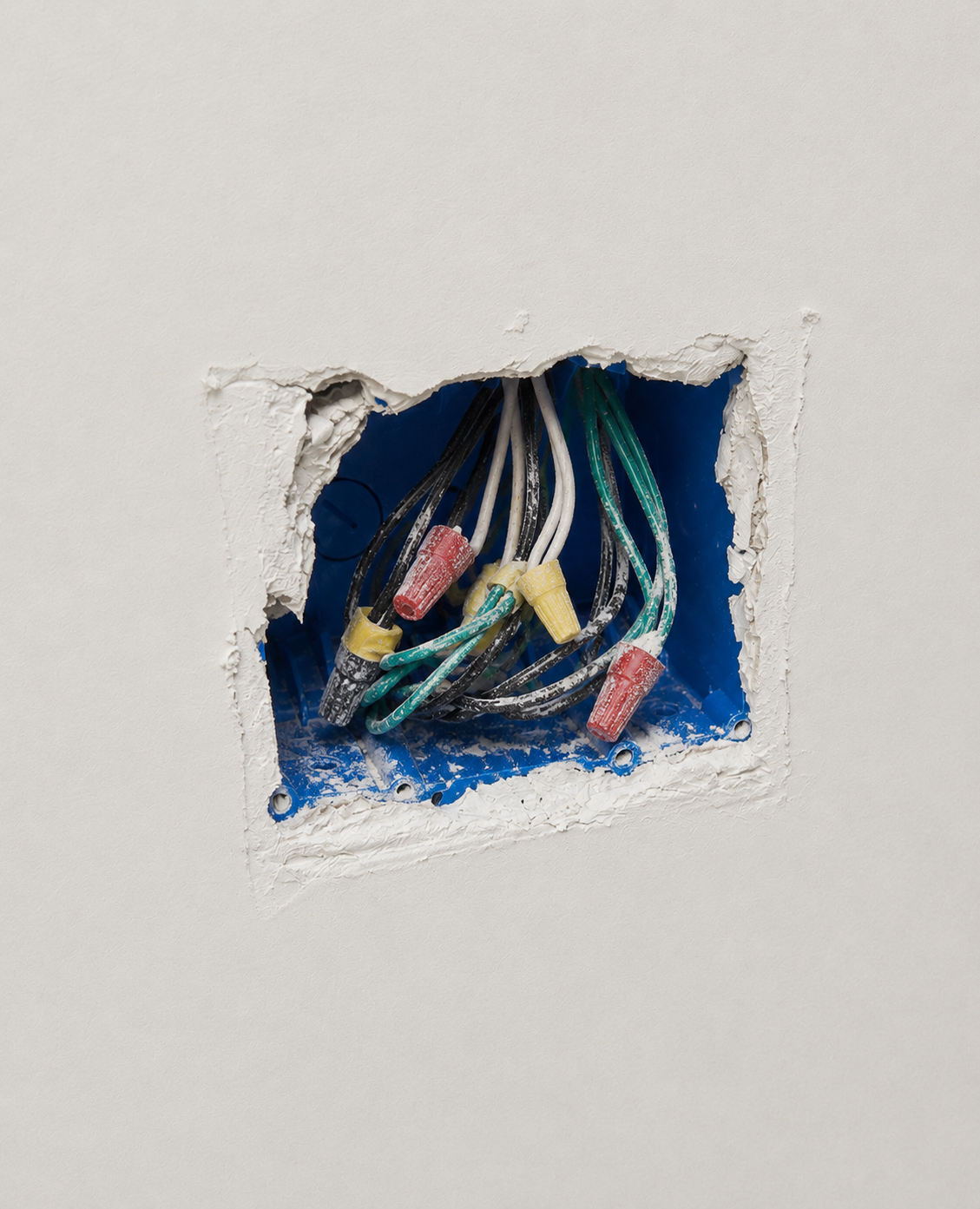
WITHOUT M-PLATES
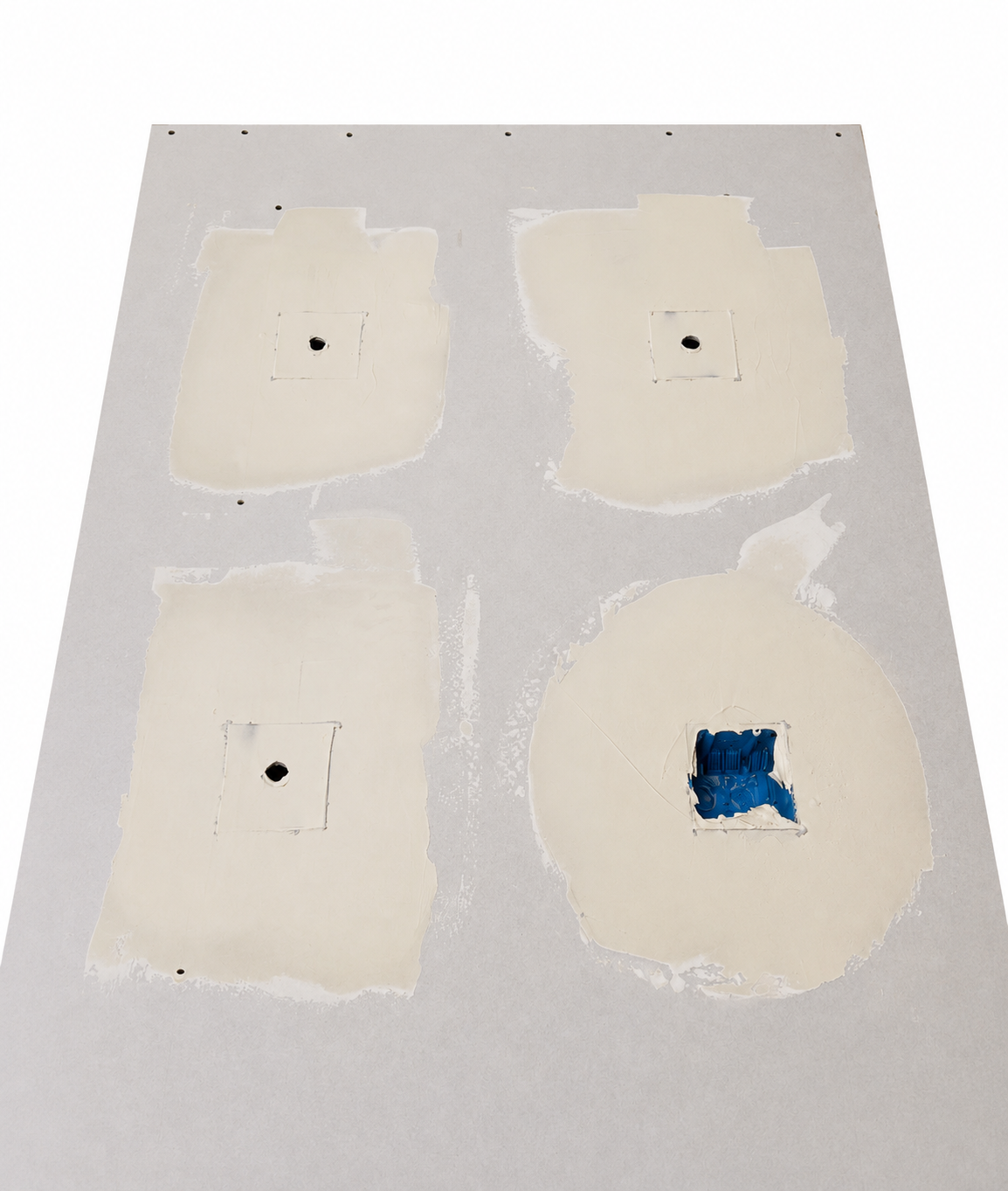
Mess inside. More cleanup.
Compound can push past the opening and into the box, leaving cleanup for electrical finish and increasing the chance of edge damage and rework.
 M-PLATESPATENT PENDING
Install after drywall is hung. Mud straight over the box. Prime. Paint. Pull the M-Plate and leave a clean, square electrical box ready for trim-out.
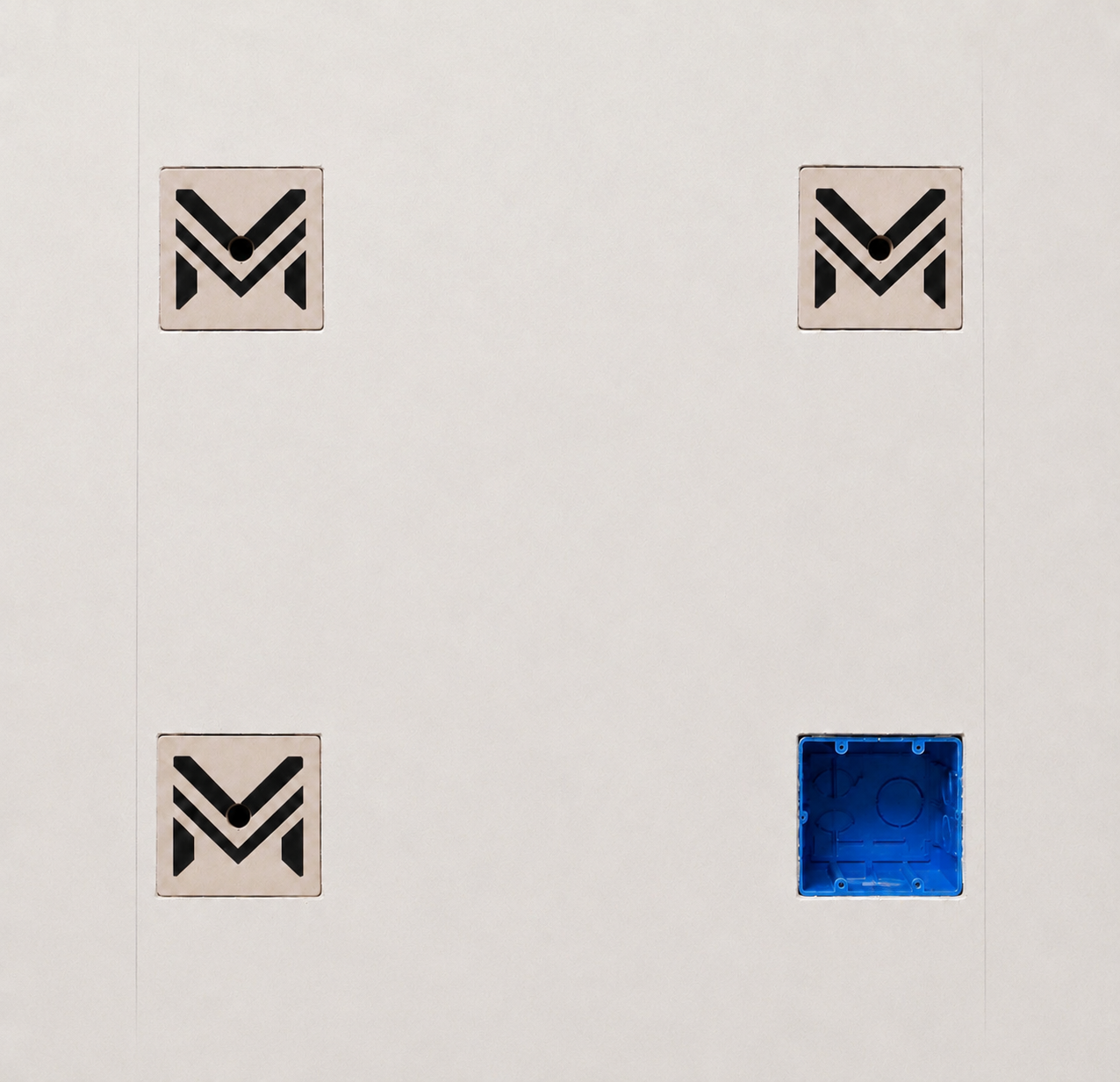
One simple plate helps save labor across drywall, electrical, painting and punch.
Traditional finishing forces drywall crews to work compound around each electrical opening, coat after coat. Mud, primer and paint can enter the box, and damaged edges can create downstream patch-and-paint callbacks.
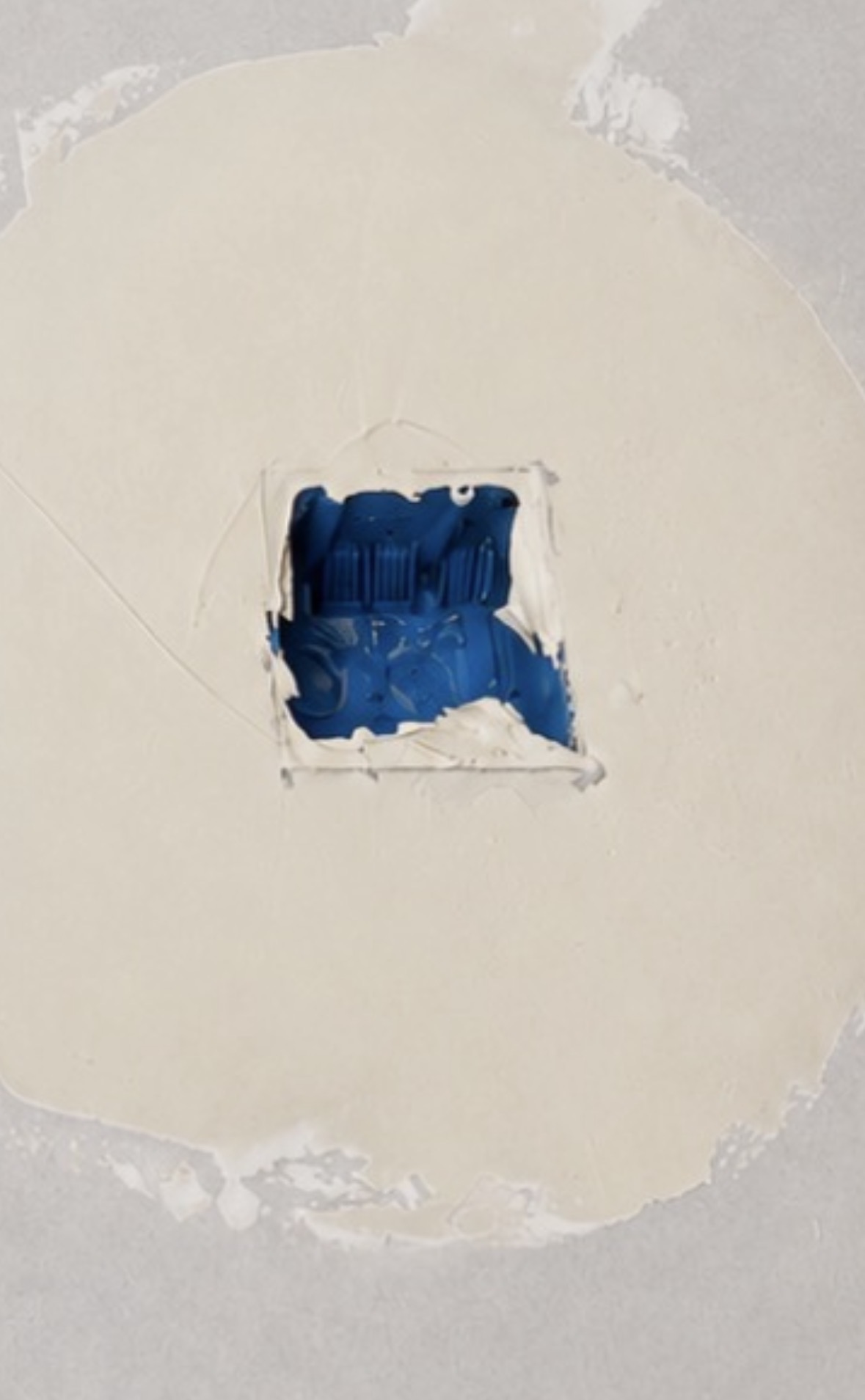
Without a temporary barrier, drywall compound can be pushed through the opening and end up inside the electrical box. M-Plates give finishers a surface to mud straight across, helping keep compound on the wall and out of the box.
Compound can push past the opening and into the box, leaving cleanup for electrical finish and increasing the chance of edge damage and rework.
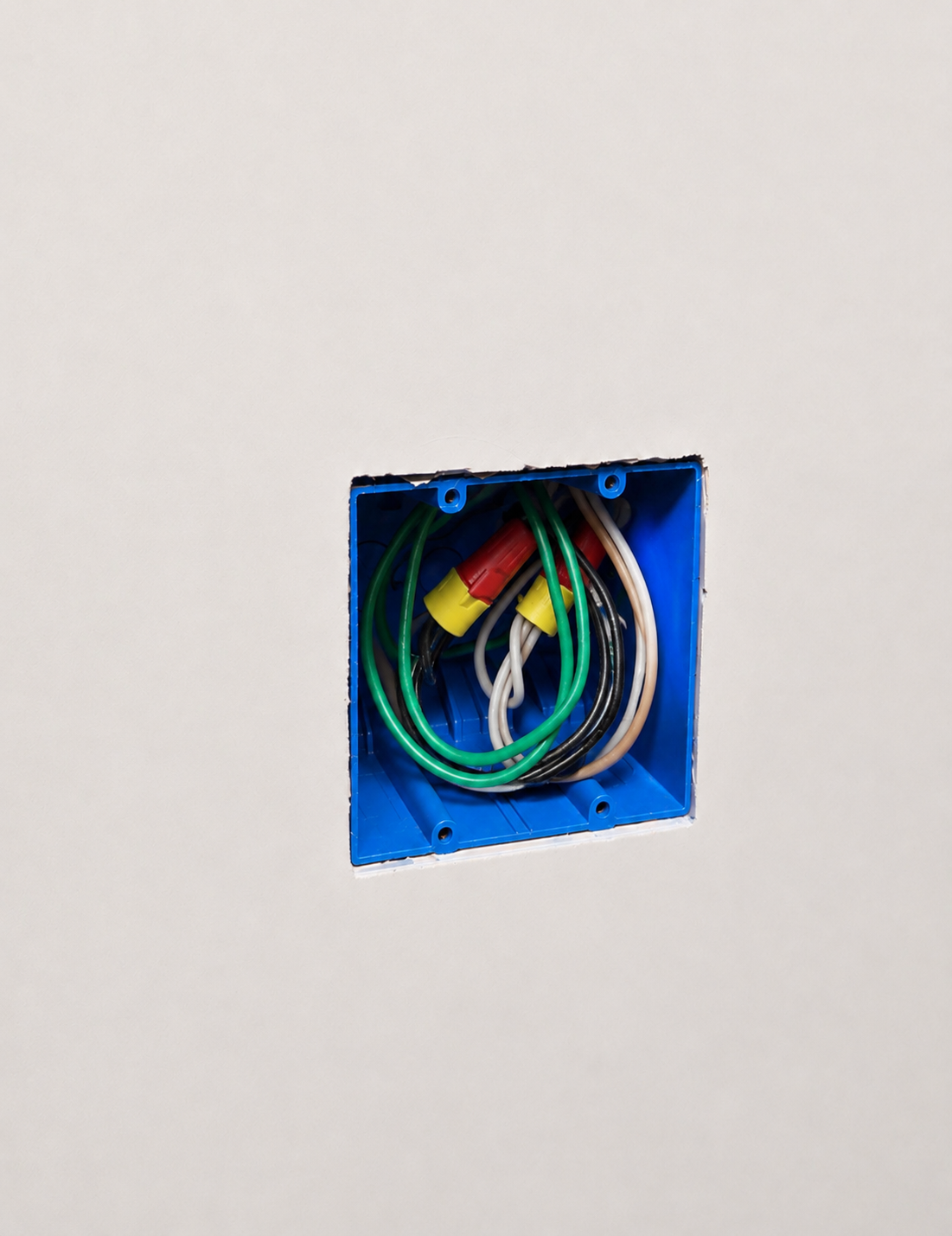
M-Plates help keep drywall compound, primer and paint out of the box and off the wiring, leaving a cleaner box ready for electrical trim-out.
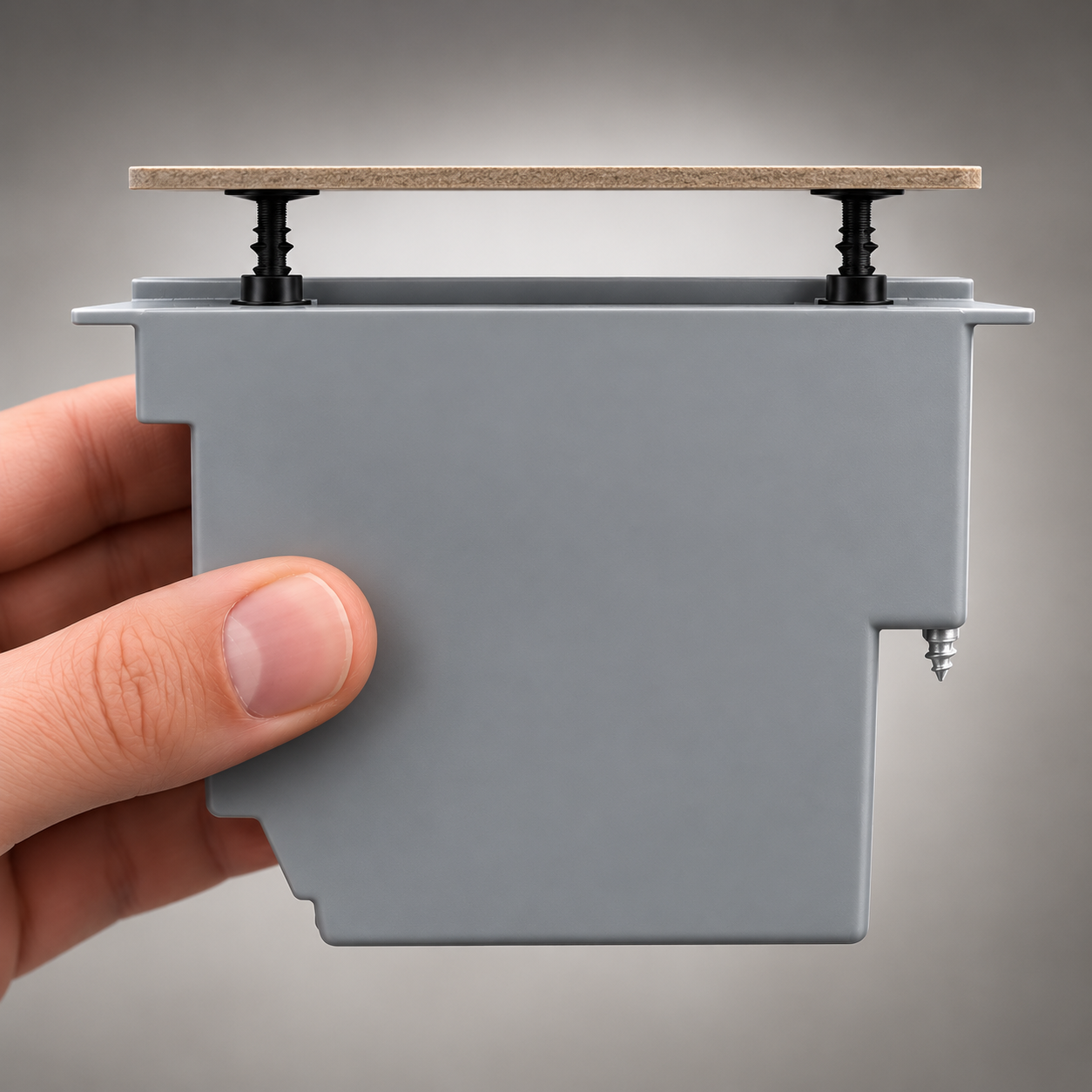
After drywall is hung, the drywall crew aligns the shanks with the electrical box screw holes and pushes the M-Plate into place.
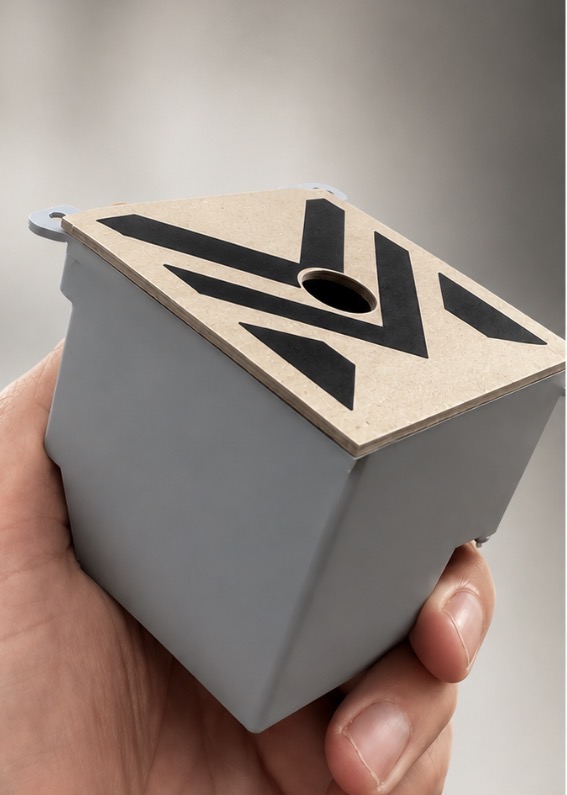
The plate sits across the box opening, creating a temporary protected surface for finishing.
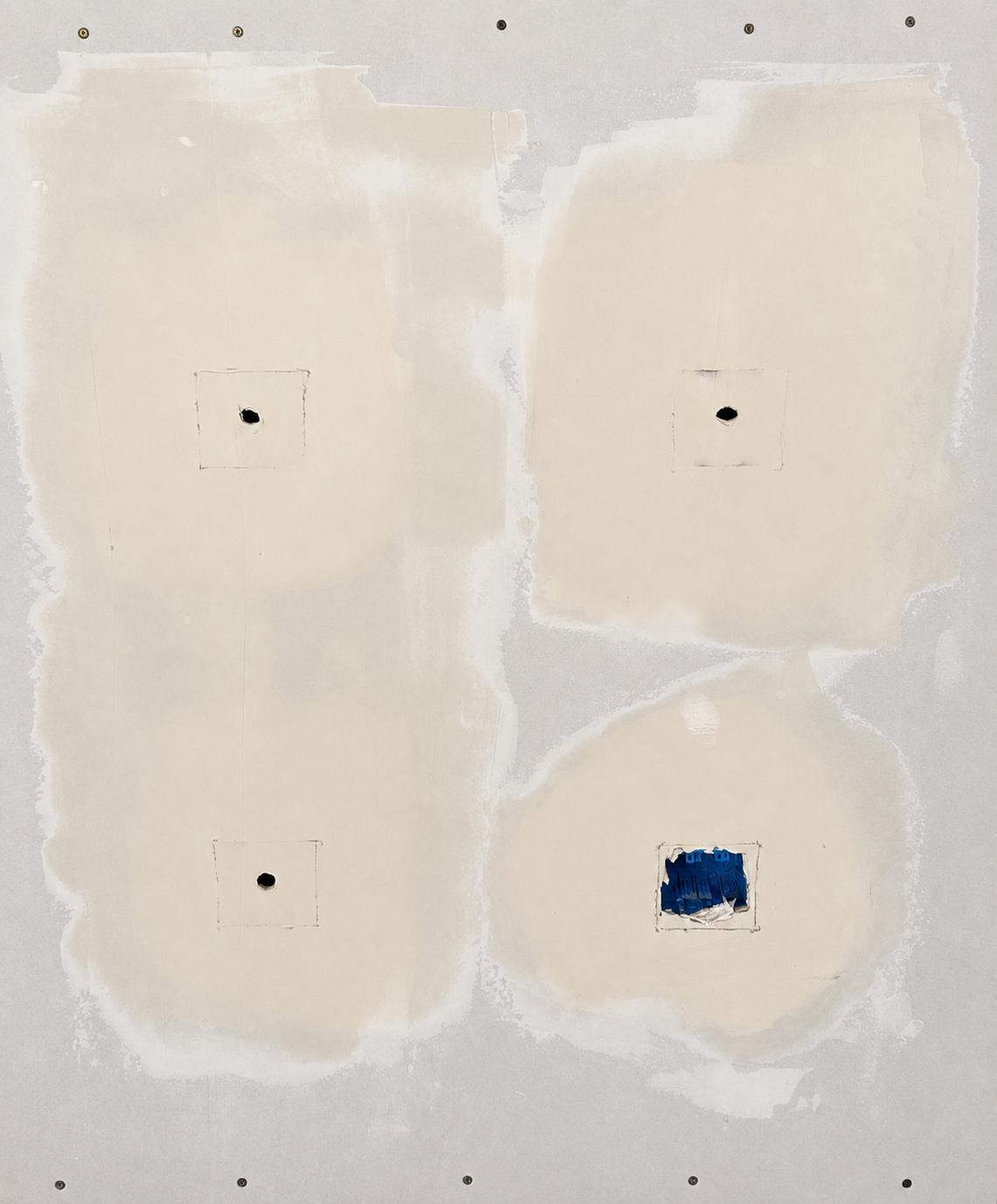
Finishers make normal straight passes over the box instead of working in circles around the opening. M-Plates are made from durable chipboard with an absorbent surface designed to let drywall compound dry at the same natural pace as the surrounding drywall.
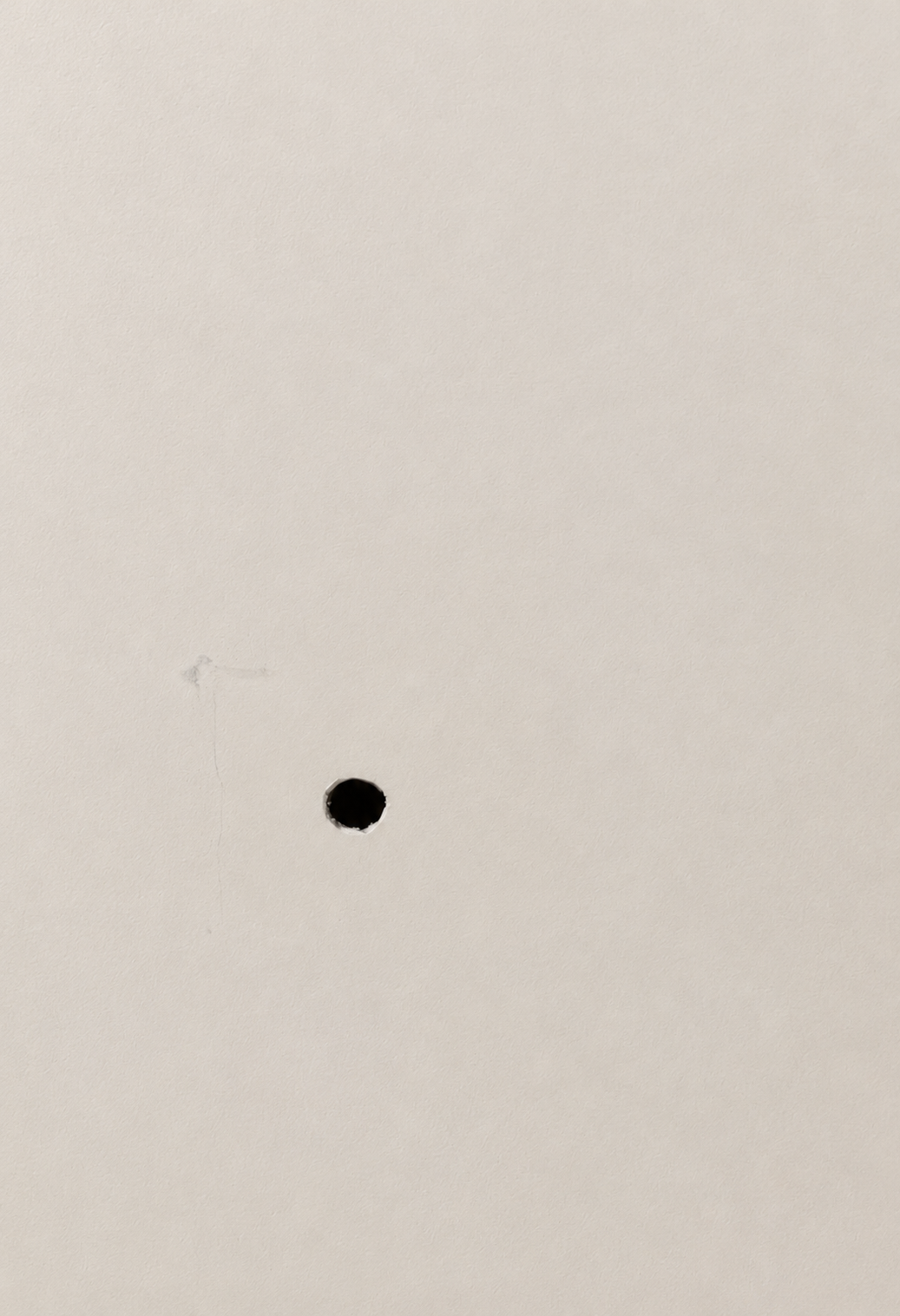
Leave the M-Plate installed through primer and paint. The ¾-inch finger hole identifies the box location and remains accessible.
After finishing is complete, hit the center with a hard object such as the handle of a drywall knife or trowel to break the finished edges free. Then use the finger hole and pull the plate straight out.
The standard plates work individually on common boxes and can be combined for larger multi-gang openings. A perforated guide on the back makes it easy to trim only the plate that needs modification.
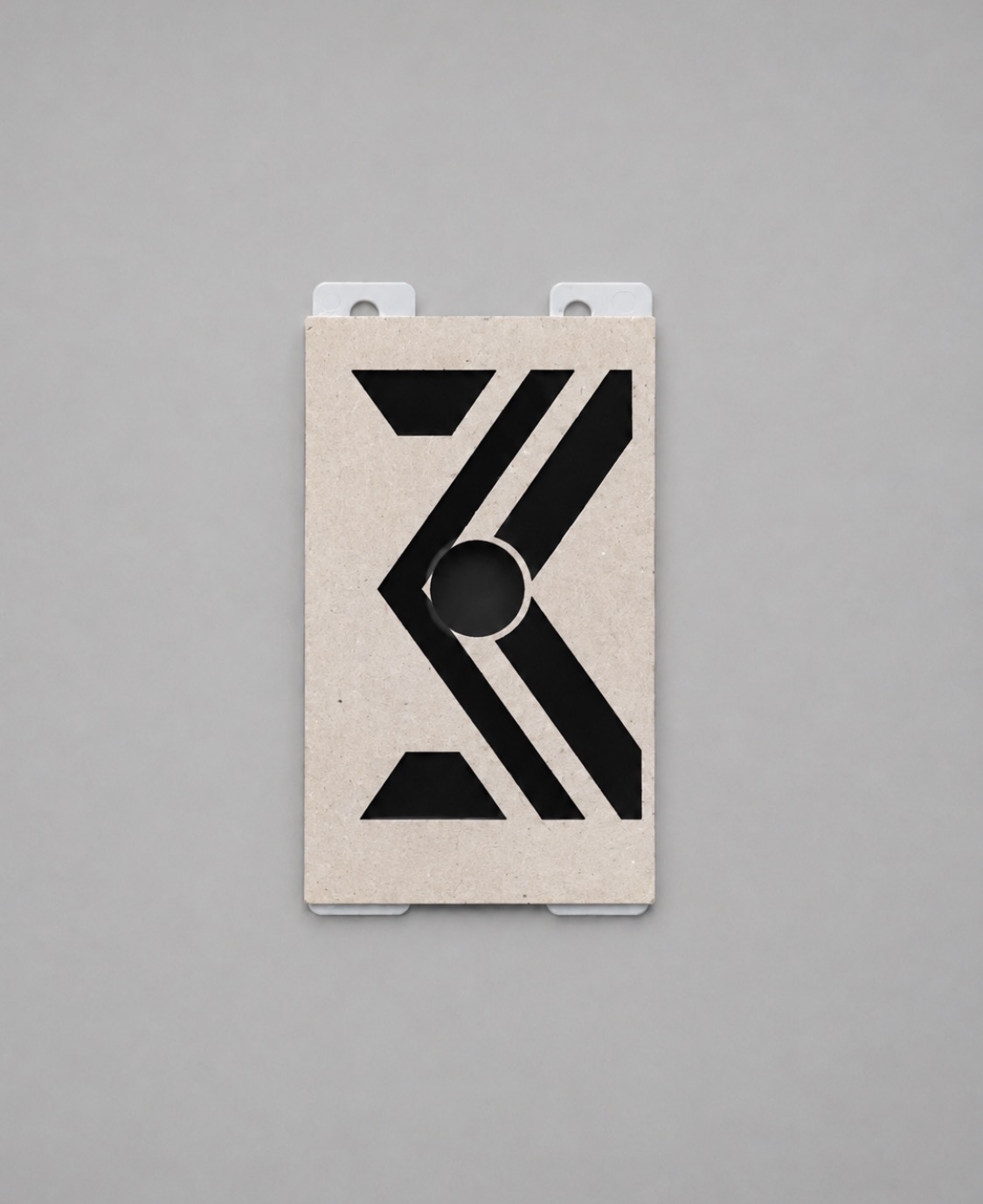
The single-gang plate uses the same centered finger hole and push-in fastening system in a narrower footprint.
Once seated, the plate creates a flat temporary surface that can be finished directly over.
The back side includes a perforated line that provides a clear trimming guide for multi-gang layouts. Only the plate being reduced needs to be cut.
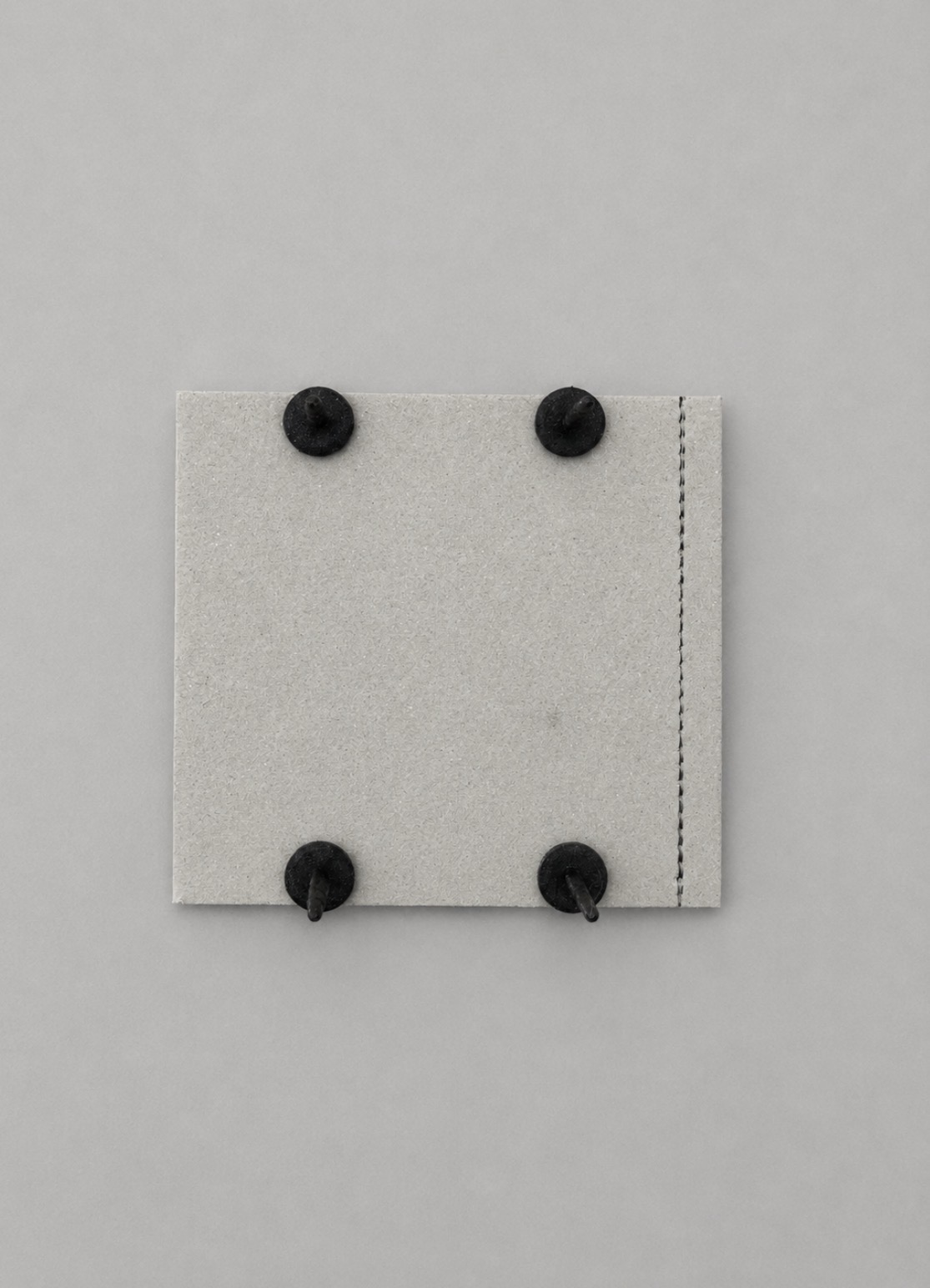
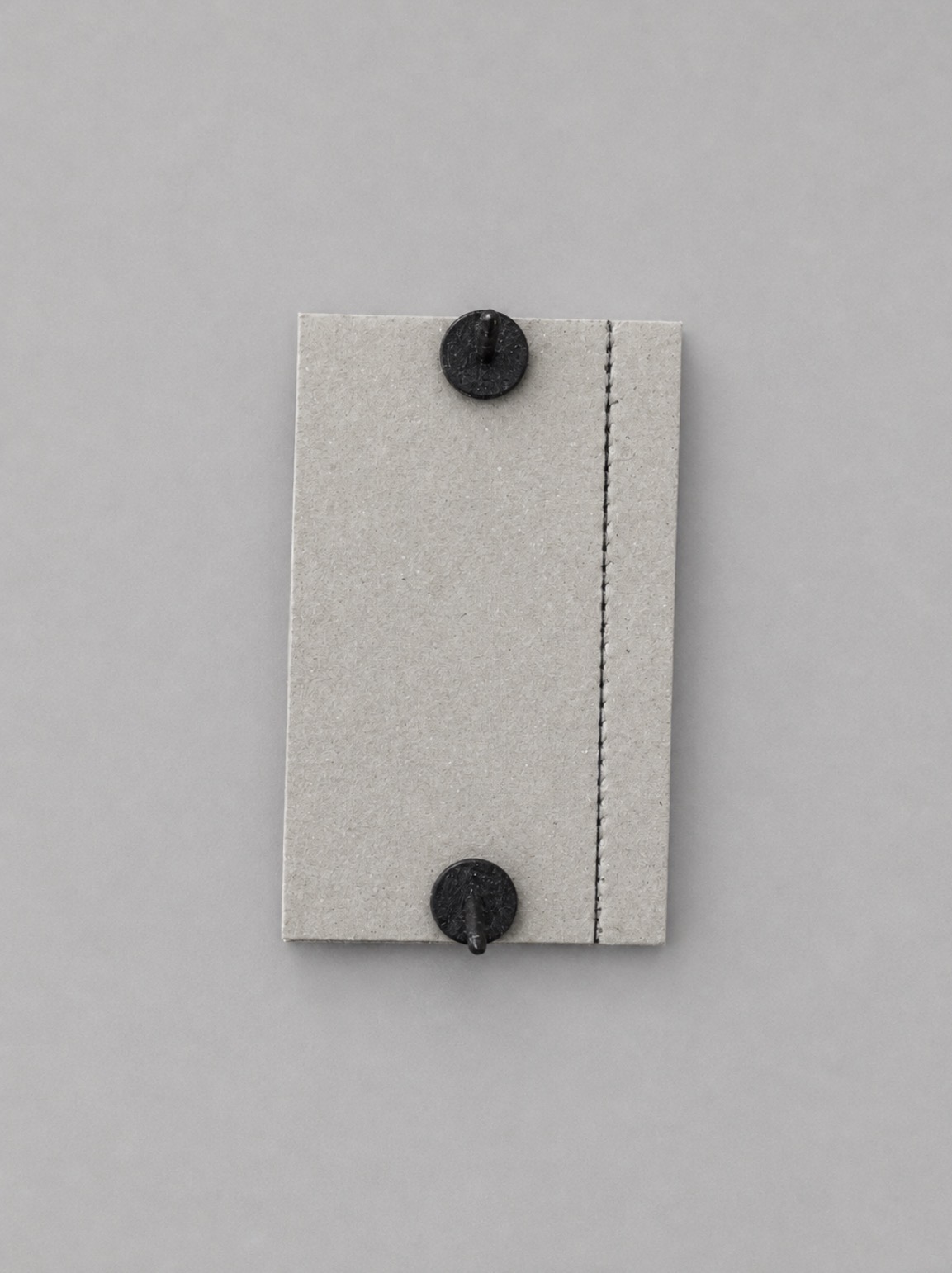
For boxes larger than 2-gang, cut one M-Plate along the perforated guide on the back and place it next to a full M-Plate. You only alter one plate—the adjoining full plate stays intact.

The right plate is cut along the perforated guide so the two plates meet cleanly across the opening.
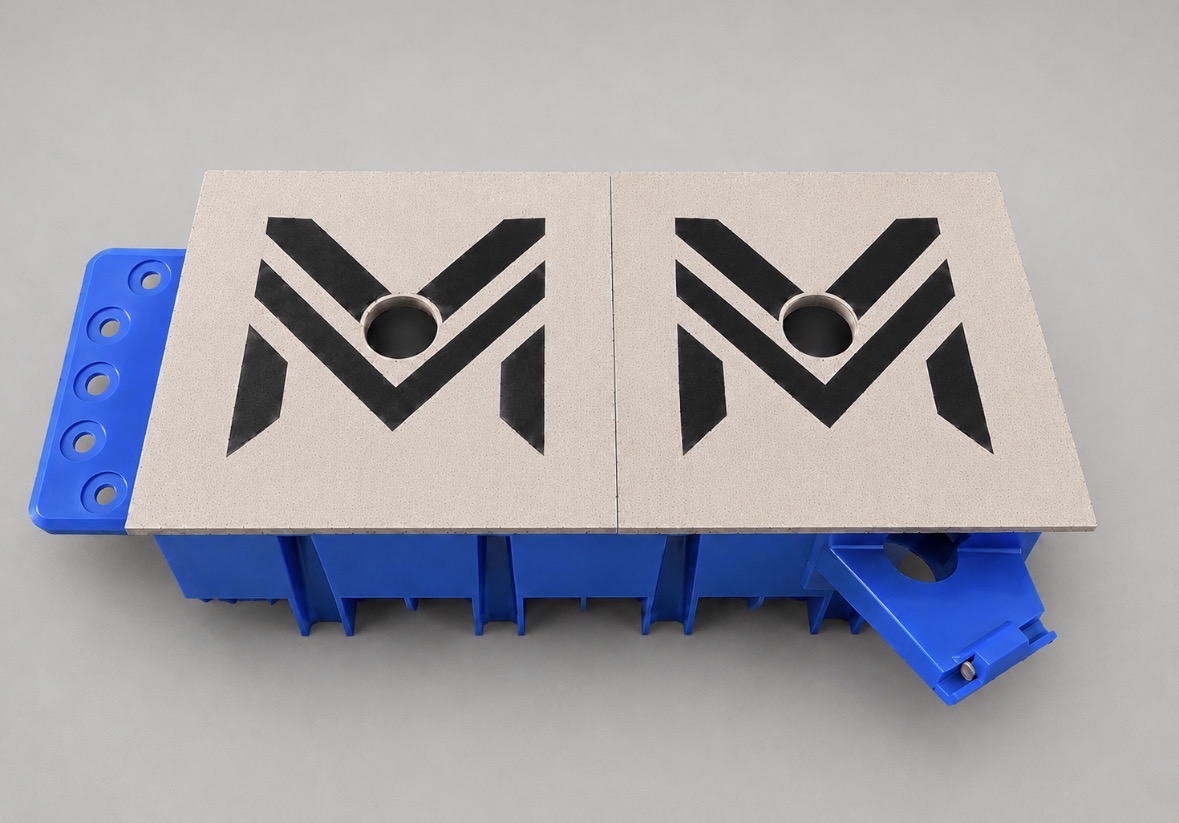
A full plate pairs with the required trimmed section to cover the wider box while preserving the same installation method.
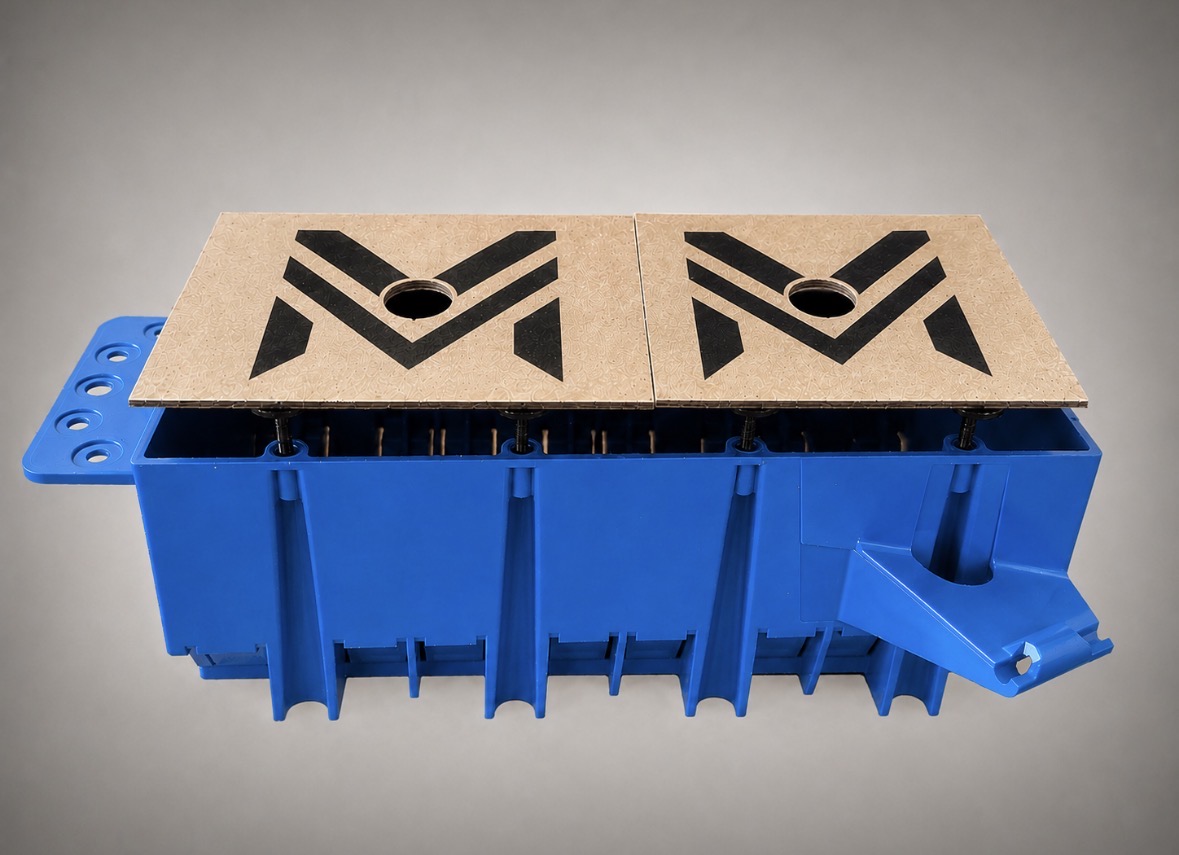
The plates stay supported by the box screw locations while creating a continuous finishing surface above the opening.

M-Plates are designed to work with metal electrical boxes and metal rings in addition to plastic boxes, giving installers the same temporary protection across common residential and commercial applications.
The absorbent chipboard surface accepts drywall compound and allows it to dry at the same natural pace as the surrounding drywall.
Replace repetitive finish-around-the-box motions with straight passes across the plate.
Help keep drywall compound, primer and paint away from the inside of the box and wiring.
Keep the temporary barrier in place through primer and paint before exposing the finished box.
Cleaner openings can mean fewer damaged edges, patch repairs, repainting trips and trade callbacks.
A single box may only cost minutes of extra finishing and cleanup. Multiply that by several coats and hundreds—or thousands—of boxes across a project, and repetitive labor becomes meaningful.
Field-tested labor savings data coming soon. M-Plates will publish measured comparisons rather than unsupported estimates.
M-Plates is in product development. Interested in field testing, distribution, or learning more?
Contact M-Plates